The Pre-Call Trust Problem in B2B SaaS (And How to Fix It)
Your prospects show up to sales calls cold. Not because your team is bad, but because nothing builds trust before the conversation starts. Here's how to fix the structural gap.
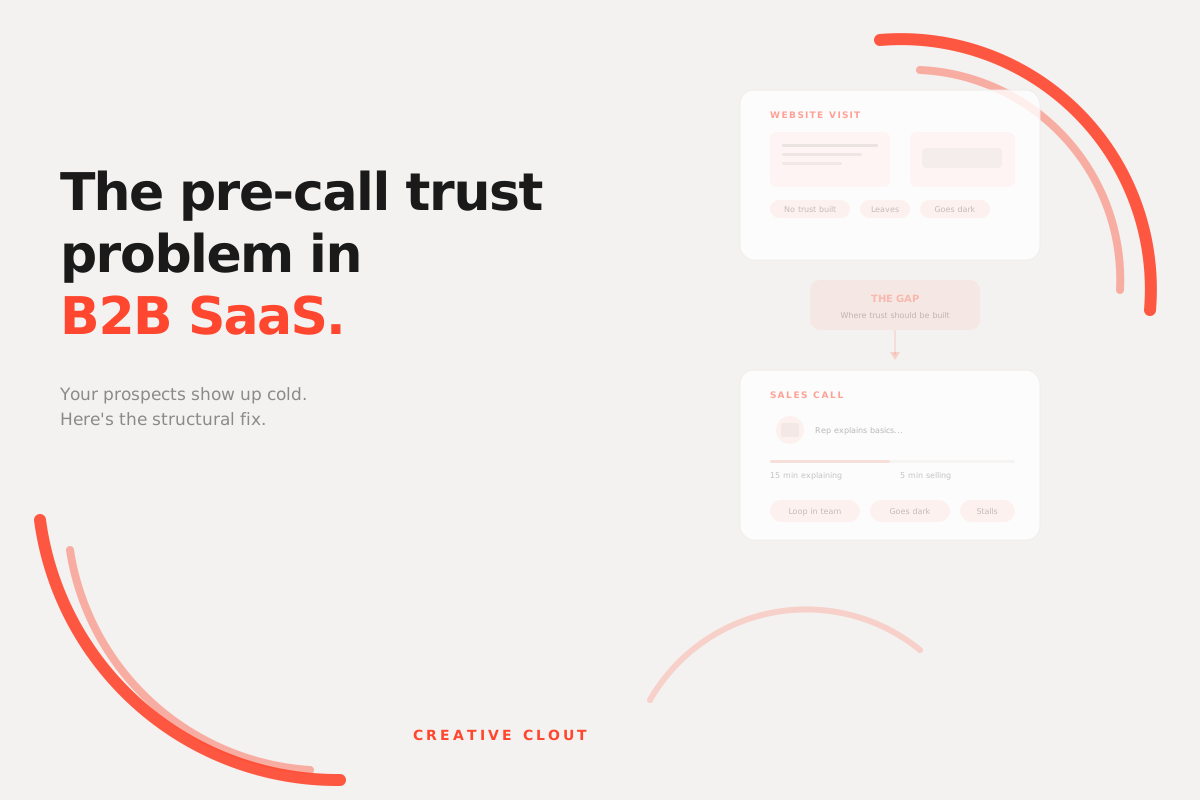
Your sales rep picks up the phone. The prospect booked the call three days ago. They seemed interested. But within the first two minutes, it's clear they don't really know what your product does. They're polite, they're listening, but they're starting from zero.
Your rep spends the next 15 minutes explaining the basics - what the product is, how it works, why it's different. By the time they get to the actual value conversation, the call is half over. The prospect says "this is interesting, let me loop in my team" and books a follow-up. Two weeks later, they go dark.
This isn't a sales problem. It's a trust problem. And it happens before the call ever starts.
The structural gap nobody talks about
In most B2B SaaS companies, the sales process assumes that the first real conversation is where trust begins. Everything before the call - the website, the ad, the cold email - is treated as a lead generation mechanism. Get them to book. The rep will handle the rest.
But here's what actually happens between "they booked a call" and "they showed up to the call." The prospect visits your website again. They skim your homepage. They might check your pricing page. They might read a paragraph or two of copy. They might look at your LinkedIn.
None of those touchpoints build trust. They build familiarity at best, and confusion at worst. The prospect arrives at the call knowing your company exists and vaguely what category you're in. That's it. They don't understand how your product actually helps someone like them. They don't feel confident that you understand their problem. And they definitely haven't seen enough to overcome the natural skepticism that comes with talking to a vendor for the first time.
That gap — between booking the call and showing up pre-sold — is where deals start dying before they even begin.
Why this gap exists
Most SaaS companies invest heavily in two things: getting traffic to their website and training their sales team. The website's job is to generate leads. The sales team's job is to close them. But nobody owns the middle — the experience between "I'm aware of this company" and "I trust them enough to have a real conversation."
Your homepage has copy and screenshots. Maybe a product tour. Maybe some logos. But none of that builds the kind of trust that makes a prospect show up to a call already leaning toward yes. Text is processed analytically. The prospect reads your claims and evaluates them skeptically. That's the wrong mode for trust-building.
Trust is built through three things: understanding that someone gets your problem, seeing evidence that they've solved it before, and feeling confident that working with them won't be a waste of your time. Most SaaS websites deliver none of these before the first call.
What pre-call trust actually looks like
When pre-call trust exists, the sales conversation is fundamentally different. The prospect opens with "I saw your video and I get what you do - I have a few questions about how it works for our specific situation." The rep doesn't need to explain. They don't need to convince. They're having a strategic conversation from the first minute.
The call goes from 45 minutes to 20. The prospect doesn't need a follow-up just to understand the basics. They're already asking about implementation, timelines, and pricing - the questions that signal a deal is actually moving forward.
The difference isn't that the rep is better. It's that the prospect did the understanding work before the call, on their own time, at their own pace. By the time they talk to a human, the trust foundation is already there.
Why video is the fix, not more copy
You can't solve the pre-call trust problem with more text on your website. Here's why.
Reading is active and effortful. A prospect has to choose to read your homepage copy, process it analytically, and decide whether they believe your claims. That's a lot of cognitive work for someone who's casually evaluating whether to give you 30 minutes of their time.
Video is passive and experiential. The prospect clicks play and receives information without effort. They hear your tone of voice. They see the quality of your thinking. They watch a narrative unfold that shows them their own problem and how it gets solved. In 90 seconds, they absorb more context, more nuance, and more trust than they would from five minutes of reading.
This isn't an opinion about video being "better" than text. It's about the specific job that needs to be done in the pre-call window. The job is: build enough trust and understanding that the prospect shows up to the call ready to have a real conversation. Video does that job more efficiently than any other format because it delivers information, personality, and credibility simultaneously.
The mechanics of building pre-call trust
A video that actually builds pre-call trust does three specific things.
First, it shows the prospect their own problem before it shows them your product. The opening seconds need to describe a situation the viewer recognizes from their own experience. Not "our platform offers AI-powered analytics." Instead: "your team is pulling data from three different tools and spending hours reformatting it into something your board can actually read." When the viewer sees their own reality on screen, trust begins immediately because they feel understood.
Second, it addresses hesitations before they crystallize into objections. Every SaaS product has recurring doubts that prospects carry into sales calls. "Is this going to be hard to implement?" "Will my team actually adopt it?" "Is this really different from what we already use?" A strategically scripted video handles these proactively - not by saying "don't worry about implementation" but by showing how the implementation actually works and why it's simpler than they expect.
Third, it demonstrates expertise through thinking, not claims. Saying "we're the leading platform" doesn't build trust. Walking through a specific scenario where you show the before and after of someone's workflow — explaining why the obvious approach doesn't work and what you'd do differently - that builds trust. The viewer thinks "these people actually understand this problem" rather than "these people want me to believe they're good."
The downstream effect on your entire sales process
When pre-call trust exists, everything downstream improves. Not just the first call — the entire deal cycle.
Your rep saves time because they're not re-explaining fundamentals on every call. That time compounds across every deal in the pipeline. A rep who saves 15 minutes per call across 20 calls a month just got back five hours to spend on deals that are actually close to signing.
Your prospect engages differently because they feel respected. You didn't waste their time making them sit through an explanation they could have absorbed on their own. You came prepared. They came prepared. The conversation starts at a higher level and stays there.
Your champion sells better internally. When they need to bring in their VP or CFO, they don't have to fumble through their own explanation. They send the video. The stakeholder watches it. Everyone is working from the same clear understanding of what the product does and why it matters. The deal doesn't stall because of an information gap between stakeholders.
Your follow-up converts better because the prospect has a reference point. When your rep sends a follow-up email, the prospect doesn't have to reconstruct the entire conversation from memory. They remember the video. They remember how it made them feel about their problem. Re-engagement is easier because the trust was built visually and emotionally, not just verbally on a call they're already forgetting.
How to diagnose your own pre-call trust gap
Look at three data points.
How long does your average first call last? If it's consistently 40+ minutes and the first half is education, trust isn't being built before the call.
What percentage of first calls result in a second call just to "loop in the team" or "go over it again"? If it's over 30%, your prospects aren't absorbing enough before the conversation to move forward with confidence.
What does your follow-up look like after a first call? If it's mostly text emails with no visual or video component, you're asking a prospect to maintain trust through the weakest possible medium.
If any of these reveal a gap, the issue isn't your sales team. It's what's happening — or not happening — before they pick up the phone.
The fix isn't more calls, more emails, or more slides. It's building a trust layer that works before any human gets involved. One asset that does the heavy lifting so your team can focus on what they're actually good at — closing.