Your Champion / Lead Can't Sell Your Product Internally (Here's What to Do)
Your prospect loves your product. But when they try to pitch it to their VP or CFO, it falls apart. The deal stalls. Here's why it happens and the one fix that actually works.
The demo went great. Your prospect was nodding along, asking smart questions, clearly seeing the value. They said all the right things. "This is exactly what we need." "Let me bring this to my team." "I'll get back to you next week."
Then nothing.
Two weeks pass. Your rep follows up. The prospect responds, but the energy is different. "We're still discussing internally." "My VP had some questions I couldn't answer." "Can you send me something I can share with the team?"
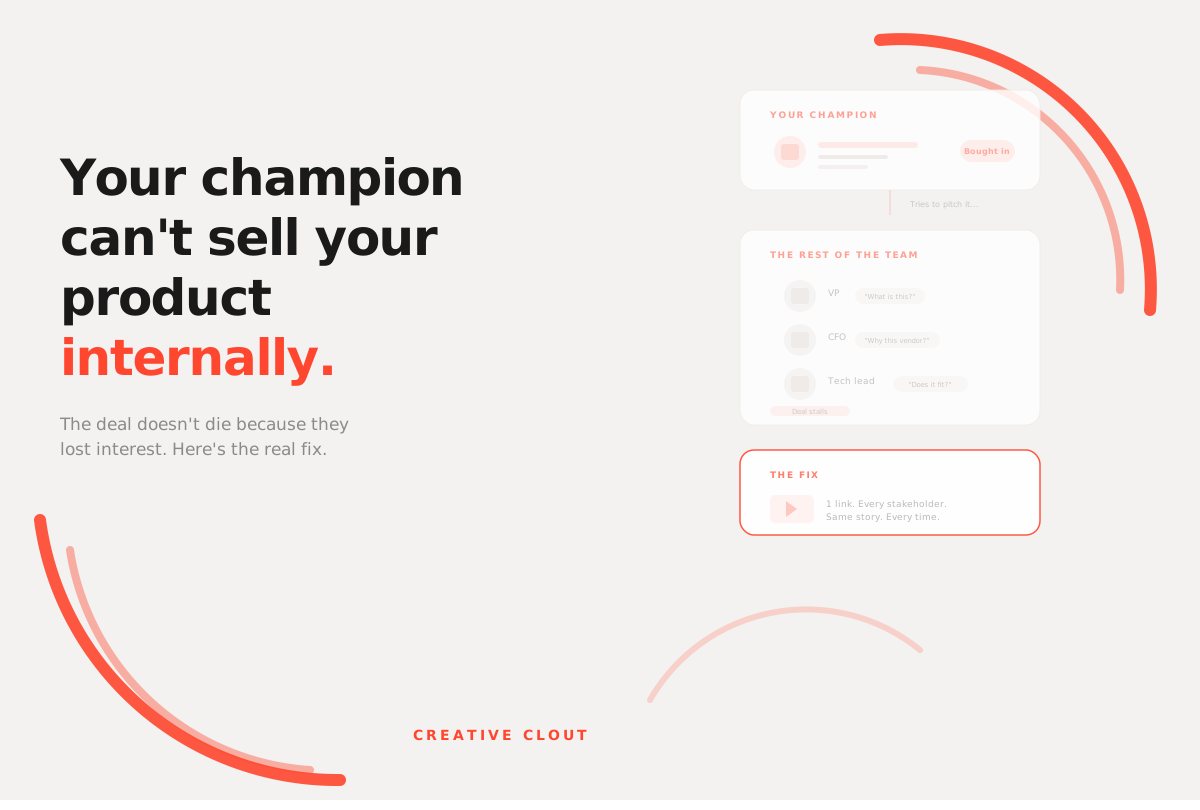
The deal isn't dead because the prospect lost interest. It's dead because they couldn't sell your product to the people who need to say yes. And that's not their fault. You sent them into that internal conversation with nothing but their memory of a demo and maybe a PDF.
The champion problem
In any sales-led SaaS deal over a few thousand dollars, your prospect is almost never the only decision-maker. There's a VP who controls budget. A technical lead who needs to evaluate fit. A CFO who wants to understand ROI. Sometimes a procurement team that needs to justify the vendor selection.
Your sales rep spent 45 minutes building trust, walking through the product, handling objections, and creating excitement. Your champion absorbed maybe 60% of that. Now they need to recreate that same experience for three to five other people who weren't on the call. They need to explain what the product does, why it matters, why it's better than alternatives, and why now is the right time to buy.
They can't do it. Not because they're not smart or not bought in. Because recreating a sales conversation from memory is almost impossible. The nuance gets lost. The objection handling disappears. The energy that made them excited in the first place doesn't transfer through a secondhand explanation.
So the VP hears a watered-down version of your pitch. They ask a question the champion can't answer confidently. The room shifts from "let's move forward" to "let's slow down." The deal enters limbo.
This is the most common way SaaS deals die, and most companies don't even realize it's happening. They look at their pipeline and see "stalled" or "went dark" and assume the prospect wasn't serious. But the prospect was serious. The internal selling just failed.
Why the usual fixes don't work
Most sales teams try to solve this by giving the champion more materials. A one-pager. A case study PDF. A slide deck. Access to a recorded demo.
None of these work well, and here's why.
A one-pager is a summary, not a sales tool. It lists features and benefits in bullet points. It doesn't build trust, create urgency, or handle objections. The VP glances at it and thinks "okay, seems interesting" without feeling any of the conviction your rep built on the call.
A slide deck requires someone to present it. Your champion isn't a presenter. They don't know which slides to emphasize, how to handle questions that come up, or how to frame the narrative in a way that builds toward a decision. The deck sits in a Slack thread with a message that says "check this out when you get a chance." Nobody checks it out.
A recorded demo is too long and too specific. A 45-minute recording of a sales call is not something a CFO is going to sit through. They'll scrub through the first two minutes, get confused by the context they're missing, and close the tab.
The problem with all of these materials is that they require effort from the recipient. Reading a PDF is work. Watching a long recording is work. Presenting a deck is work. And the stakeholders who need to say yes are busy people who aren't invested in your product the way your champion is. They'll give you 60 seconds of attention, maybe 90. If you haven't built conviction in that window, you've lost them.
What actually works
The fix is a video that's specifically designed to do internal selling. Not your full homepage explainer. Not a recorded demo. A focused piece that makes the case for your product in under 90 seconds to someone who has never talked to your team.
This video needs to do four things.
First, it needs to establish the problem in terms the stakeholder cares about. Not "our AI-powered platform automates workflow management." Instead: "your team is spending 10 hours a week on manual reporting that should take minutes." The VP, the CFO, the technical lead all need to hear the problem framed in business terms they relate to, not product terms your champion learned on the demo.
Second, it needs to show the transformation, not the features. What changes after implementation? What does the workflow look like on day 30? What specific pain goes away? Stakeholders don't care about your feature list. They care about what their world looks like after they sign the contract.
Third, it needs to handle the two or three biggest objections proactively. "Is this going to be hard to implement?" "Will our team actually use it?" "How is this different from what we already have?" If the video addresses these before the stakeholder even asks, the internal conversation shifts from skepticism to logistics.
Fourth, it needs to be effortless to share. One link. No downloads. No login required. No "schedule a demo to see this." The champion copies a URL, drops it in Slack or email, and every stakeholder can watch it on their own time in under two minutes.
When this video exists, the internal selling dynamic changes completely. The champion doesn't have to explain anything. They say "watch this, it's two minutes" and the video does the rest. Every stakeholder gets the same quality explanation. The same objection handling. The same level of trust that your best rep would build on their best day.
The difference between an explainer and an internal selling tool
Your homepage explainer video and your internal selling video might look similar. They're both short, animated, and focused on your product. But they serve different purposes and should be scripted differently.
Your homepage explainer targets someone who has never heard of you. It needs to capture attention, explain the category, and create enough interest to book a call. The audience is cold. The job is awareness and trust.
Your internal selling video targets someone who has heard of you, secondhand, from a colleague who's already bought in. They don't need to be introduced to the category. They need to be convinced that this specific product is worth their team's time and budget. The audience is warm but skeptical. The job is conviction and urgency.
The scripting difference is subtle but critical. The homepage video starts broad: "here's the problem, here's how we solve it." The internal selling video starts specific: "your team member saw a demo and thinks this could save your org 10 hours a week. Here's exactly what that looks like."
Some companies use one video for both purposes and it works well enough. But the companies that close the fastest have assets built for each stage of the deal. A video for the prospect who's never heard of you. A video for the champion who needs to sell internally. A short clip for the follow-up when the deal goes quiet.
How to know if you have a champion problem
Look at your pipeline data. What percentage of deals stall after a strong first or second call? If a prospect is engaged, asking good questions, expressing clear interest, and then the deal goes quiet for weeks before eventually dying or dragging on, that's almost always an internal selling failure.
Ask your reps: when a deal stalls, what's the stated reason? If you hear "they need to loop in their team" or "the VP wants more information" or "they're still discussing internally," those are all variations of the same problem. Your champion tried to sell it and couldn't.
Ask yourself: when a champion needs to pitch your product to the rest of their organization, what do you give them? If the answer is a PDF, a deck, or nothing at all, you're sending an untrained salesperson into the most important conversation of the deal with no tools.
The fix isn't training your champions. It's giving them something better than their own explanation. One link. One video. The same clear, compelling case, delivered perfectly, to every person who needs to say yes.