Explainer Video vs Product Demo vs Spotlight/Sizzle Video: Which Do You Need?
Not sure if you need an explainer video, a product demo, or a spotlight video? Here's what each one does, when to use it, and how to pick the right one for where your business is right now.
You know you need a video. You're just not sure what kind.
Should it be an explainer that tells your whole product story? A demo that walks through the UI? A short spotlight piece for a launch or ad campaign? Every agency uses these terms slightly differently, and most SaaS companies end up either buying the wrong type or buying all three when they only needed one.
Here's how to think about it clearly.
The three types, defined simply
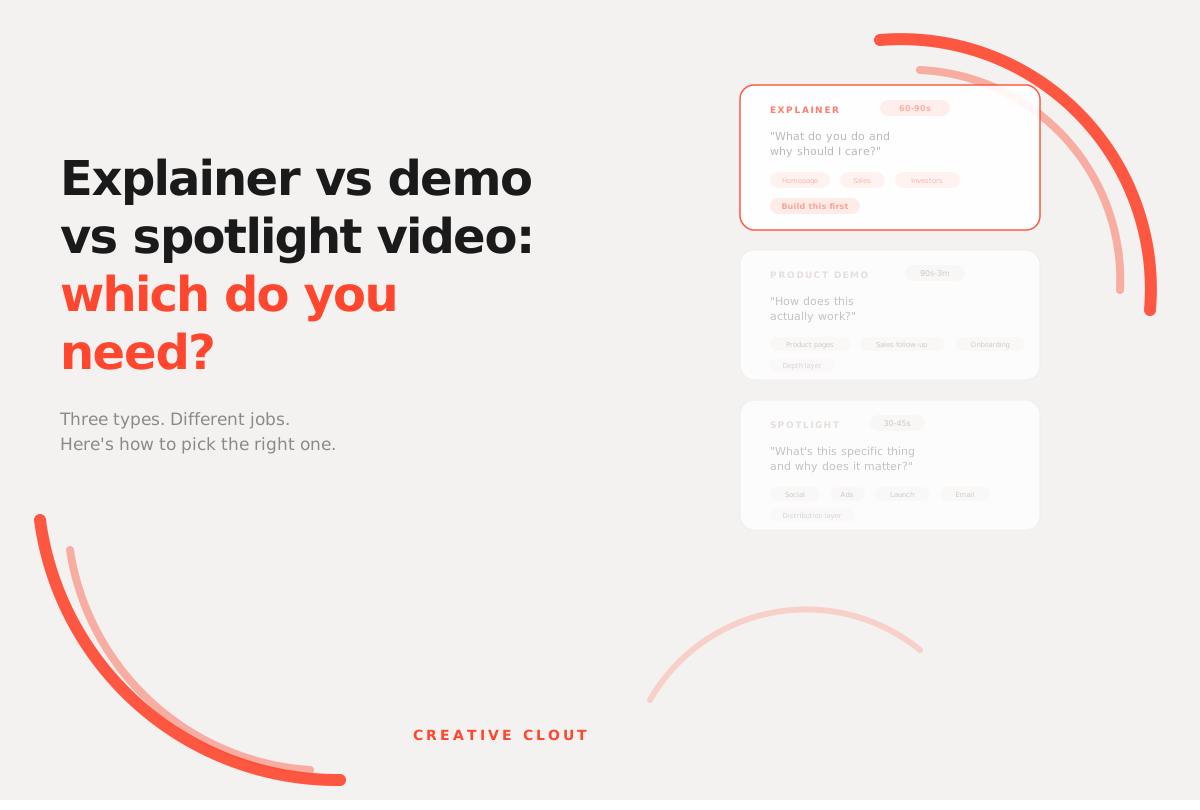
An explainer video answers the question "what does this company do and why should I care?" It's narrative-driven. It tells a story that starts with the buyer's problem, shows the transformation your product creates, and ends with a reason to take the next step. It's typically 60 to 90 seconds. It lives on your homepage, gets sent before sales calls, goes in investor decks, and becomes the single asset your whole team reaches for when someone asks "what do you guys do?"
A product demo video answers the question "how does this actually work?" It's interface-driven. It shows the product in action, walking through specific workflows, screens, and features. It can be a polished animated version of the UI or an actual screen recording with voiceover. It's typically 90 seconds to 3 minutes. It lives on product pages, in sales follow-ups, and in onboarding flows where users need to see exactly what they're getting.
A spotlight video / sizzle video answers the question "what's this specific thing and why does it matter?" It's focused and short. One feature. One use case. One announcement. It's typically 30 to 45 seconds. It's built for social, paid ads, product launches, email campaigns, and any context where you need to grab attention fast and communicate one clear message.
Each one serves a different purpose at a different moment in the buyer's journey. The confusion happens when companies treat them as interchangeable.
When you need an explainer
You need an explainer video when the core problem is that people don't understand what your product does or why it matters to them. This is the most common situation for SaaS companies with complex products, technical audiences, or markets where the category itself needs explaining.
Signs you need an explainer: your sales team spends the first 15 minutes of every call explaining the basics. Your homepage bounce rate is high. Prospects book demos but show up without a clear picture of what you do. Investors ask "so what exactly is this?" Your champion can't pitch your product internally because the story is too hard to tell from memory.
The explainer doesn't try to show every feature or walk through every screen. It builds conviction. The viewer walks away thinking "I get why this matters and I want to learn more." Everything after that, the demo, the sales call, the trial, builds on the foundation the explainer laid.
For most SaaS companies, this is the first video you should build. Without it, every other asset is working harder than it needs to because nothing is doing the foundational work of making people care.
When you need a product demo
You need a product demo video when people already understand what you do but want to see how it works before committing. This is a consideration-stage asset. The buyer is past "what is this" and into "show me."
Signs you need a demo: prospects ask for a walkthrough before booking a call. Your free trial sign-up rate is lower than expected because users aren't sure what the experience will look like. Your sales team does live demos on every call and wishes they could automate the repetitive parts. Enterprise prospects need to evaluate technical fit before involving their team.
The demo video works best after the explainer has done its job. The buyer already cares. Now they want proof that the product delivers on the promise. A demo without an explainer is showing features to someone who doesn't know why they should care. An explainer without a demo leaves the buyer wanting to see the real thing.
One important distinction: a product demo video is not a screen recording of your sales rep doing a live demo. Those are useful as internal tools but too long, too unstructured, and too specific to one prospect's questions to work as a scalable asset. A proper demo video is scripted, designed, and paced to show the most compelling parts of your product in a tight, polished format.
When you need a spotlight / sizzle
You need a spotlight video when you have one specific message to communicate and you need it to land fast. Product launch. New feature. Event promotion. Ad creative. Sales outreach clip.
Signs you need a spotlight: you're launching a feature and need something shareable for social and email. Your ad creative is stale and you need fresh video assets. Your sales team wants a short clip they can drop into outreach emails. You're presenting at a conference and need a quick piece to show on screen.
The spotlight is the most versatile format because it's short and focused enough to work almost anywhere. But it's also the most limited in depth. It can't tell your whole story. It can't walk through your product comprehensively. It's a single punch, not a full argument.
Spotlights work best when they're cut from or built alongside a larger asset. If you've already built an explainer, your spotlight can pull from the same narrative foundation and visual language. This gives you consistency across channels without building everything from scratch.
How they work together
The most effective SaaS video strategy isn't choosing one type. It's understanding how they layer.
The explainer is your foundation. It tells the full story once, well. It lives on your homepage and anchors everything else.
The demo is your depth layer. It gives interested buyers the detail they need to move forward with confidence. It lives on product pages and in sales conversations.
The spotlight is your distribution layer. It takes the core message and adapts it for specific contexts, channels, and moments. It lives everywhere your audience is, in short bursts.
When all three exist, they cover the full buyer journey. The spotlight grabs attention on social or in an ad. The explainer builds trust on your website. The demo closes the gap between interest and commitment. Each one does a job the others can't.
The most common mistakes
Building a demo first without an explainer. This is like showing someone a product tour when they haven't decided whether they care about the category. You're giving answers to questions they haven't asked yet. Build the explainer first. Let the demo support it.
Building a spotlight without a narrative foundation. A 30-second clip that looks great but doesn't connect to a larger story is disposable content. It might get views but it won't build anything cumulative. Spotlights are most powerful when they're fragments of a bigger narrative that the viewer can follow back to your homepage.
Trying to make one video do everything. The "explainer that also demos the product and also works as an ad" is the most requested and least effective format. When you try to explain, demonstrate, and sell in one piece, you end up with a 3-minute video that's too long for social, too shallow for a demo, and too unfocused for an explainer. Each format has a job. Let it do that one job well.
Building all three at once when you only need one. If you're pre-Series A with no video at all, you don't need a full system. You need an explainer. Get that right. See how it performs. Then add a spotlight or demo as your needs become clearer. The companies that benefit from all three are typically at the stage where they have active sales processes, multiple channels, and enough traffic to justify assets for each stage of the funnel.
How to decide right now
If you could only build one video, build the explainer. It does the most work across the most contexts. It builds the strategic foundation that every other asset benefits from. And it addresses the most fundamental question every SaaS company faces: can people understand why this matters?
If you already have an explainer and it's working, add a spotlight for distribution. Cut-downs from your explainer for ads, social clips for LinkedIn, short pieces for email campaigns. This multiplies the reach of the strategic work you've already done.
If you're in active sales conversations and prospects need to see the product before committing, add a demo. This is especially important for enterprise deals where technical evaluation happens before budget approval.
If you want all three and want them to feel cohesive, build them together from the same strategic foundation. The discovery, scripting, and design work happens once. The output is a system of assets that share a narrative and visual language. That's more efficient than building three separate videos with three separate agencies at three different times.
The right video isn't the most expensive one or the longest one. It's the one that matches where your buyers get stuck. Figure out the stuck point. Build the video that unsticks them.