SaaS Video for Product-Led Growth: From Free User to Paying Customer
PLG companies acquire users but struggle to convert them. Video fixes the gap between sign-up and payment by making the value obvious before users have a reason to leave.
Your sign-up numbers look great. Users are finding your product, creating accounts, poking around. The top of your funnel is working.
But somewhere between "signed up" and "paying customer," most of them disappear. They log in once or twice. They try one feature. They don't come back. Or they stick around on the free tier indefinitely, using just enough to get by but never upgrading.
This is the defining challenge of product-led growth. You've built something people want to try. You haven't figured out how to make them commit.
The instinct is to fix the product. Improve onboarding flows. Add tooltips. Build a better in-app experience. Those things matter. But they all assume the user is already inside the product and paying attention. The reality is that most users make their decision about whether your product is worth their time before they ever get deep enough for onboarding to help.
That's where video changes the equation.
The PLG conversion gap
In a sales-led model, a human rep builds trust, creates urgency, and handles objections. The prospect gets a tailored experience that addresses their specific concerns. It's expensive and slow, but it works because someone is actively guiding the buyer toward a decision.
In product-led growth, the product is supposed to do all of that on its own. But products aren't great at selling themselves. They're great at delivering value once someone knows how to use them. The gap between "I signed up" and "I understand why this matters to me" is where most PLG companies lose the majority of their users.
Think about what happens when a new user signs up. They land in your product. They see a dashboard, maybe some empty states, maybe a setup wizard. They're trying to figure out what to do first, why it matters, and whether this is worth their time. They're making that evaluation in the first two to five minutes. If the answer isn't clear by then, they leave.
A video that lives on your homepage, in your onboarding email, or on your sign-up confirmation page can compress that evaluation from five minutes of confused clicking to 60 seconds of clear understanding. The user sees what the product does, why it matters to someone like them, and what their first meaningful action should be. They enter the product with context instead of confusion.
Where video plugs into the PLG funnel
Video isn't one tool for PLG companies. It's a different tool at each stage of the user journey.
Before sign-up, a video on your homepage or landing page answers the question "what is this and why should I care?" Most PLG homepages rely on headlines, screenshots, and feature grids. Those work for users who are willing to read and interpret. A video works for everyone else, which is most people. It builds enough understanding and trust in 60 to 90 seconds that the user feels confident clicking "start free trial" instead of opening another tab.
During the first session, a video in the onboarding flow or welcome email answers the question "what should I do first and why does it matter?" The biggest drop-off in PLG happens between account creation and first meaningful action. Users sign up with good intentions and then get overwhelmed by options. A short video that shows them the one thing they should do first and what it unlocks can be the difference between activation and abandonment.
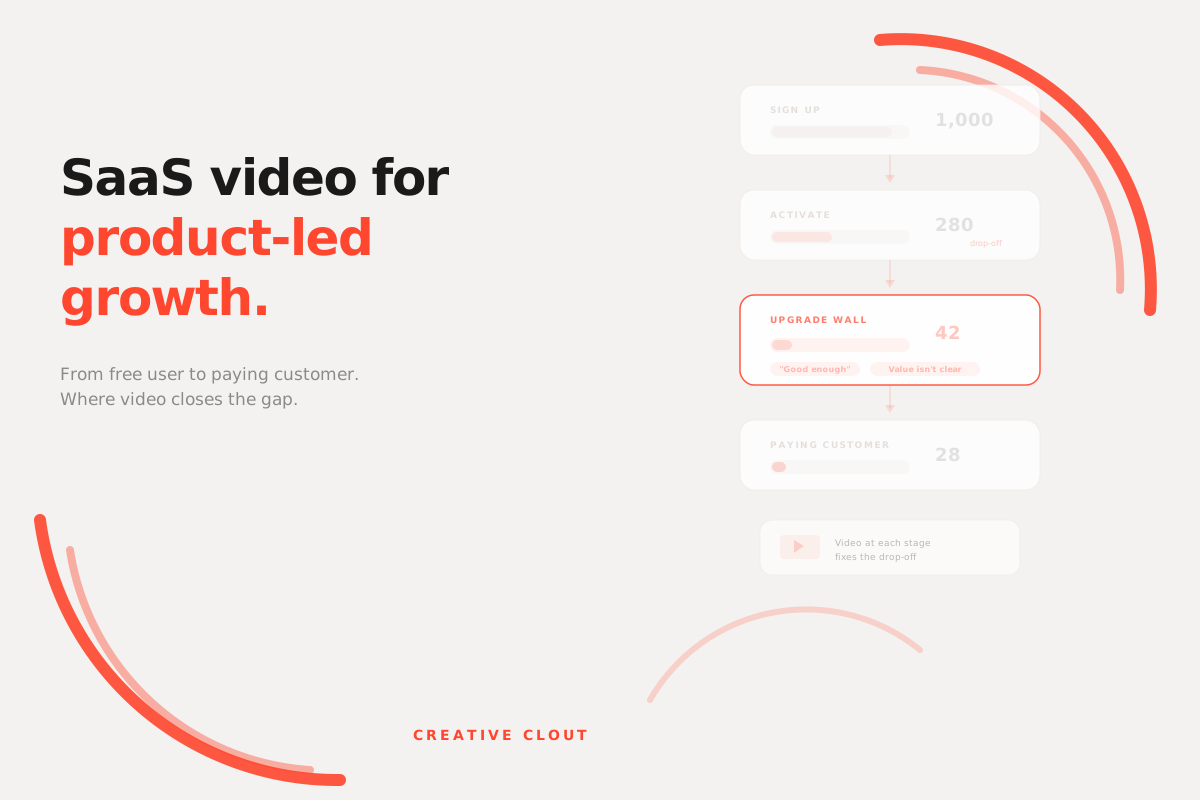
At the upgrade wall, a video answers the question "is the paid version worth it?" This is where most PLG revenue is won or lost. The user has been on the free tier long enough to form habits. They hit a limit or see a feature behind the paywall. In that moment, they're deciding whether to pay or work around the limitation. A video that shows them what changes on the other side of the upgrade, framed as transformation rather than features, pushes them over.
After conversion, a video helps new paying customers understand what they just unlocked and how to get the most from it. Early churn in PLG often happens because users upgrade, don't immediately see enough additional value, and cancel within the first 30 to 90 days. A video that sets expectations and shows them their next steps reduces that early churn significantly.
The upgrade wall problem
The upgrade wall deserves special attention because it's the single most expensive failure point in PLG.
You've spent money on acquisition. Ads, content, SEO, partnerships. You've gotten users in the door. They've signed up. They're using the product. Some of them are using it every day. And then they hit the paywall and decide the free tier is good enough.
This decision isn't always rational. In many cases, the paid tier would save them significant time or unlock capabilities that would change how they work. But they don't see that clearly enough to justify the cost. They see a list of features they'd get access to and think "I can probably get by without those."
The problem isn't that the paid tier isn't valuable. It's that the value isn't communicated in a way that creates urgency. A feature list says "here's what you'd get." A video says "here's what your workflow looks like today versus what it looks like on the paid plan." One is information. The other is motivation.
The most effective upgrade videos don't focus on what features are locked. They focus on what the user is missing out on. What their daily experience could feel like. What becomes possible that isn't possible now. They make "good enough" feel like settling, because the user can see exactly what they're leaving on the table.
What PLG video gets wrong
Most PLG companies that invest in video make one of three mistakes.
The first is building a video that only works for the homepage. It introduces the product, explains the value proposition, and ends with "sign up for free." That video serves one moment in the user journey. It doesn't help with activation, upgrade conversion, or retention. The company checks the "we have a video" box and wonders why it didn't change their metrics.
The second is building a product tour instead of a narrative. A screen recording that walks through every feature in the product is useful as documentation. It's not useful as a persuasion tool. Users don't need to see every feature. They need to understand why the product matters to them and what their first step should be. A feature tour overwhelms. A narrative motivates.
The third is ignoring video entirely because "we're product-led, the product should speak for itself." This is the most costly mistake. Your product speaks for itself to users who already understand it. It doesn't speak for itself to users who signed up 30 seconds ago and are trying to figure out what they're looking at. The product needs a translator, and video is the most effective one available.
Building a video system for PLG
The PLG companies that get the most from video treat it as a system, not a single asset. The system has three components.
The first is a homepage or landing page video that builds trust and drives sign-ups. This is the widest-reach asset. It targets everyone who visits your site, including users who will never sign up without enough context to feel confident.
The second is an activation video that lives in the onboarding flow. This targets users who've already signed up but haven't experienced the core value yet. It's shorter, more specific, and focused on getting the user to their first win as quickly as possible.
The third is an upgrade video that lives at or near the paywall. This targets users who've experienced the free tier and are deciding whether to pay. It shows them what changes on the other side, framed around their workflow, not your feature list.
Each video serves a different user at a different stage with a different goal. Together, they cover the full PLG journey from awareness to conversion to retention.
Building all three from the same strategic foundation, with the same visual language and narrative approach, ensures consistency across the experience. The user who watched your homepage video, signed up, activated through the onboarding video, and later converts through the upgrade video has had a coherent experience. Each touchpoint reinforced the same core message: this product makes your work better, and the more you use it, the more value you unlock.
How to tell if your PLG funnel has a video gap
Look at three metrics.
What's your sign-up to activation rate? If less than 30% of sign-ups complete a meaningful first action within the first session, users aren't understanding the value fast enough. A homepage or onboarding video addresses this.
What's your free to paid conversion rate? If it's below 5%, users on the free tier aren't seeing enough reason to upgrade. An upgrade video addresses this.
What's your first-90-day churn rate on paid users? If more than 15% of new paying customers cancel within 90 days, they didn't fully understand what they were paying for when they upgraded. A post-conversion video or better upgrade positioning addresses this.
Each of these metrics points to a specific moment where communication is failing. Not the product. Not the pricing. The communication of value at the moment the user needs to feel it most.
Your product is good. Your users are showing up. Give them something that makes the value impossible to miss at every stage of the journey. That's what turns sign-ups into revenue.